Annual Report 2025–2026
PARIVARTAN – THE CHANGE
Building Human Potential. Strengthening Communities. Creating Sustainable Change.
About Parivartan – The Change
Parivartan – The Change is a multidisciplinary development institution working at the intersection of public health, education, gender equity, livelihoods, skill development, sanitation and community empowerment.
Our work is founded on the understanding that developmental challenges rarely exist in isolation. Health influences education; education shapes employability; employability strengthens economic independence; and dignity remains central to every stage of human development.
Parivartan therefore designs and implements integrated, community-centred interventions that combine:
- awareness and capacity building,
- preventive healthcare,
- educational support,
- skill development,
- infrastructure improvement,
- behaviour change communication,
- community mobilisation,
- institutional partnerships, and sustained follow-up.
Through collaborations with corporate partners, government institutions, schools, healthcare professionals, civil-society organisations and grassroots communities, Parivartan transforms developmental intent into measurable and sustainable impact.
______________________________________________________________________________________________________________________________________
Message from the Managing Trustee
Development is often spoken of in numbers. Yet behind every number is a life, a struggle, an aspiration and a possibility waiting to be realised.
At Parivartan – The Change, we believe that meaningful development begins when people are not merely treated as beneficiaries, but recognised as informed participants in their own progress.
During 2025–26, our work extended across menstrual health, preventive healthcare, school development, educational infrastructure, sustainable menstrual management, artisan health, livelihood skills, digital literacy and women’s economic empowerment.
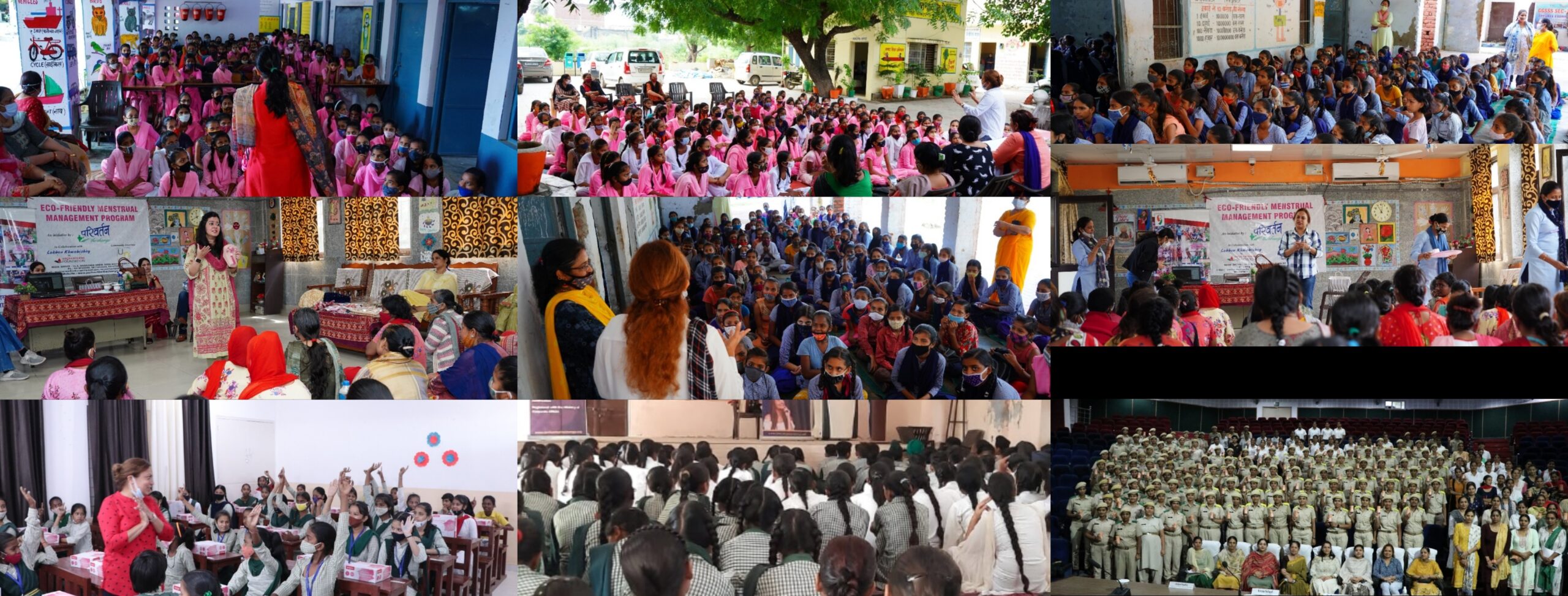
A girl gained the confidence to speak about menstruation without shame.
A policewoman discovered a safer and more sustainable menstrual choice.
A child received a dignified place to sit and learn.
An artisan accessed preventive healthcare closer to the workplace.
A woman at our skill centre began acquiring the confidence to earn independently.
Each of these outcomes represents a step towards a more equitable society.
We remain deeply grateful to Seagull Pharma, Indraprastha Gas Limited, AIACA, Haryana Police Academy, government schools, medical professionals, trainers, volunteers and community stakeholders for walking with us on this journey.
Our commitment remains unwavering: to create development that is inclusive, accountable, dignified and capable of enduring beyond the duration of a project.
Dr. Sangeeta Paul Budhiraja
Managing Trustee
Parivartan – The Change
______________________________________________________________________________________________________________________________________
The Year in Perspective
The year 2025–26 represented a period of consolidation, expansion and institutional growth for Parivartan.
Our programmes addressed critical developmental gaps through four interconnected areas:
Health and Well-being
Preventive healthcare, eye screening, menstrual health education, reproductive-health awareness, cancer awareness and general health assessments.
Education and School Transformation
Adolescent education, school health, classroom furniture support, sanitation improvement and the creation of dignified learning environments.
Women, Skills and Livelihoods
Vocational training, spoken English, computer education, personality development, financial literacy and pathways to self-employment.
Sustainability and Behaviour Change Promotion of reusable menstrual products, responsible consumption, environmental awareness and sustained community engagement.
______________________________________________________________________________________________________________________________________
Impact at a Glance
13 States
Reached through Project Swabhiman and associated menstrual-health and community interventions.
1,75,000+
Sanitary pads and intimate hygiene products distributed through awareness-led outreach.
3,370+
Doctors and medical professionals engaged through Project Swabhiman’s wider outreach network.
1,203
Women personnel of the Haryana Police Academy trained under Project Nidaan.
1,203
Menstrual cups distributed with practical guidance and structured follow-up support.
95
Desks and benches provided to improve classroom dignity and learning conditions.
Multiple Communities
Reached through general health screening, eye check-ups, menstrual hygiene education, school support and livelihood initiatives. Project Swabhiman combined menstrual-health education, community outreach, product access and educational infrastructure support across thirteen states. Project Nidaan registered and engaged 1,203 women personnel and distributed menstrual cups to all participants.
______________________________________________________________________________________________________________________________________
Our Development Practice Areas
1. Public Health and Preventive Care
Healthcare Before Crisis
Limited access to preventive services often causes manageable health concerns to remain undetected until they become serious.
Parivartan’s public-health interventions bring awareness, screening and early guidance closer to communities. Our approach combines clinical services with health education so that beneficiaries understand not only their present health status but also the importance of preventive practices.
Key Areas of Work
- general health screening,
- blood-pressure assessment,
- basic clinical consultation,
- eye examinations,
- menstrual-health education,
- adolescent and women’s health,
- breast and cervical cancer awareness,
- urinary and reproductive infection prevention,
- hygiene counselling,
- referral guidance.
Development Contribution
These interventions promote early detection, reduce avoidable health risks and improve health-seeking behaviour among underserved communities.
SDG Alignment
SDG 3 – Good Health and Well-being
SDG 5 – Gender Equality
SDG 10 – Reduced Inequalities
SDG 17 – Partnerships for the Goals
2. School Transformation and Educational Dignity
A Child’s Learning Environment Matters
Parivartan views school development as more than classroom teaching. A safe, healthy and enabling educational environment requires suitable infrastructure, sanitation, health awareness, emotional confidence and community support.
During the year, our work in schools integrated:
- adolescent-health education,
- menstrual-hygiene awareness,
- school furniture distribution,
- classroom support,
- hygiene promotion,
- sanitation improvement,
- teacher engagement,
- community sensitisation.
The distribution of desks and benches under Project Swabhiman addressed a fundamental but often overlooked educational need. Children who had previously studied without adequate classroom furniture were provided with improved seating and a more dignified learning environment.
A desk is not merely an item of furniture. It supports posture, participation, concentration, confidence and a child’s sense of belonging within the classroom.
SDG Alignment
SDG 3 – Good Health and Well-being
SDG 4 – Quality Education
SDG 5 – Gender Equality
SDG 6 – Clean Water and Sanitation
SDG 10 – Reduced Inequalities
3. Women’s Empowerment and Gender Equity
From Information to Agency
Women’s empowerment requires more than awareness. It requires access to knowledge, skills, health services, economic opportunity and the confidence to make informed decisions.
Parivartan’s gender-focused programmes bring together:
- menstrual dignity,
- reproductive-health literacy,
- preventive healthcare,
- sustainable menstrual management,
- breast and cervical cancer awareness,
- vocational skills,
- financial literacy,
- communication skills,
- digital inclusion,
- enterprise readiness.
Women and adolescent girls are engaged not as passive recipients but as partners capable of influencing families, institutions and communities.
SDG Alignment
SDG 3 – Good Health and Well-being
SDG 4 – Quality Education
SDG 5 – Gender Equality
SDG 8 – Decent Work and Economic Growth
SDG 10 – Reduced Inequalities
4. Livelihoods, Skills and Entrepreneurship
Project HUNAR
Skills for Livelihoods. Confidence for Life.
Project HUNAR is Parivartan’s institutional skill-development initiative designed to equip women and youth with market-oriented vocational abilities, communication skills, digital capability and financial awareness.
Implemented through the Parivartan Skill Development Centre at Indore, HUNAR recognises that technical skills alone do not guarantee economic independence. Individuals also require confidence, professional communication, digital familiarity and the ability to manage money responsibly.
Beauty and Wellness
Participants receive practical exposure to:
- hair care,
- skin care,
- personal grooming,
- makeup,
- hygiene and sanitation,
- salon practices,
- customer handling,
- workplace discipline.
The programme creates pathways for employment in salons, home-based services and micro-enterprise development.
Tailoring and Apparel Skills
Training covers:
- cutting and stitching,
- measurement,
- garment construction,
- alteration,
- finishing,
- basic design skills,
- boutique orientation,
- home-enterprise development.
Participants are encouraged to use their skills for employment, supplementary household income or independent enterprise.
Computer Education and Digital Literacy
Learners are introduced to:
- computer fundamentals,
- typing,
- document creation,
- MS Office,
- internet usage,
- email,
- online applications,
- digital payments,
- access to government and essential online services.
Spoken English and Communication
Training strengthens:
- functional spoken English,
- everyday conversation,
- workplace communication,
- pronunciation,
- presentation,
- public interaction,
- interview confidence.
Personality Development
Sessions include:
- confidence building,
- communication skills,
- body language,
- professional grooming,
- time management,
- teamwork,
- leadership,
- interview preparation,
- workplace etiquette.
Financial Literacy
Participants receive practical guidance on:
- banking,
- savings,
- household budgeting,
- UPI and digital payments,
- responsible borrowing,
- government financial schemes,
- basic business planning,
- income and expenditure management.
Intended Outcomes
- improved employability,
- increased workforce participation,
- stronger communication,
- enhanced digital confidence,
- women-led micro-enterprises,
- better financial decision-making,
- improved household economic resilience.
SDG Alignment
SDG 1 – No Poverty
SDG 4 – Quality Education
SDG 5 – Gender Equality
SDG 8 – Decent Work and Economic Growth
SDG 9 – Industry, Innovation and Infrastructure
SDG 10 – Reduced Inequalities
______________________________________________________________________________________________________________________________________
Flagship Programmes and Partnerships
Project Swabhiman
From Silence to Self-Belief
Supported by: Seagull Pharma
Implemented by: Parivartan – The Change
Project Swabhiman was implemented as an integrated menstrual-health, educational-inclusion and community-development initiative.
Although menstrual dignity remained at its core, the programme extended well beyond hygiene-product distribution. It addressed the broader ecosystem affecting the health, education and confidence of girls and women.
Major Components
- menstrual-health awareness,
- puberty and adolescent education,
- myth and stigma reduction,
- community engagement,
- involvement of medical professionals,
- distribution of menstrual-hygiene products,
- school furniture distribution,
- improvement of learning environments,
- sanitation and hygiene support.
Geographic Reach
Project Swabhiman established a presence across thirteen states and union territories, demonstrating the scalability and adaptability of Parivartan’s awareness-led model.
Key Achievements
- 13 states reached,
- 1,75,000+ sanitary pads and intimate hygiene wipes distributed,
- 3,370+ doctors involved,
- 750+ adolescent girls directly educated,
- 1,000+ women engaged,
- 95 desks and benches distributed,
- schools and communities supported through health and educational interventions.
The project’s documented framework emphasises menstrual health, behavioural change, educational inclusion, product accessibility and infrastructure support.
Development Significance
Project Swabhiman demonstrated that menstrual dignity is inseparable from education, gender equality and institutional support.
By combining knowledge with access and infrastructure, the programme created healthier and more inclusive environments in which girls could learn, participate and grow with confidence.
SDG Alignment
SDG 3 – Good Health and Well-being
SDG 4 – Quality Education
SDG 5 – Gender Equality
SDG 10 – Reduced Inequalities
SDG 17 – Partnerships for the Goals
Project Nidaan
Sustainable Menstrual Health for Women in Uniform
CSR Partner: Indraprastha Gas Limited
Institutional Partner: Haryana Police Academy, Madhuban
Implemented by: Parivartan – The Change
Project Nidaan was designed to promote sustainable menstrual management and preventive women’s health among female staff and recruits of the Haryana Police Academy.
The intervention brought together health education, practical demonstration, eco-friendly menstrual products, cancer awareness and structured follow-up.
Programme Components
- comprehensive menstrual-hygiene education,
- urinary-tract infection prevention,
- practical menstrual-cup demonstrations,
- product distribution,
- guidance on use and sterilisation,
- breast cancer awareness,
- cervical cancer awareness,
- life-size anatomy models and interactive learning,
- individual counselling,
- three-month follow-up,
- digital monitoring and reporting.
Key Achievements
- 1,203 women personnel registered and trained,
- 100% coverage of registered participants,
- 1,203 menstrual cups distributed,
- participants represented multiple police ranks,
- size-specific allocation undertaken,
- three-month guided support provided,
- digital monitoring strengthened accountability.
Project Nidaan exceeded its original target of 1,200 participants and achieved full participation among the 1,203 women registered.
Development Significance
Nidaan connected women’s health with environmental responsibility.
By introducing reusable menstrual products alongside accurate information and follow-up support, the programme created a replicable model for sustainable menstrual-health interventions within large institutions.
SDG Alignment
SDG 3 – Good Health and Well-being
SDG 5 – Gender Equality
SDG 12 – Responsible Consumption and Production
SDG 13 – Climate Action
SDG 17 – Partnerships for the Goals
Artisan and Community Health Initiative
Protecting Health. Preserving Livelihoods.
Organised by: AIACA
Health Intervention by: Parivartan – The Change
Location: Tajpur Pahadi, Badarpur, Delhi
An integrated health outreach initiative was organised for artisans, craftspersons and residents of the local community at Tajpur Pahadi.
Artisans frequently work for long hours under demanding conditions, often with limited access to regular preventive healthcare. Visual difficulties, musculoskeletal strain and untreated general-health concerns can directly affect both their well-being and livelihood productivity.
Services Provided
- eye examinations,
- general health check-ups,
- menstrual-hygiene education,
- preventive-health counselling,
- basic referral guidance.
Development Significance
The programme connected healthcare with livelihood security by recognising that the well-being of artisans is essential to preserving both household income and India’s traditional craft heritage.
SDG Alignment
SDG 3 – Good Health and Well-being
SDG 5 – Gender Equality
SDG 8 – Decent Work and Economic Growth
SDG 10 – Reduced Inequalities
SDG 17 – Partnerships for the Goals
Community Infrastructure and Sanitation
Dignity Must Be Built into Development
Parivartan continued to advocate for safe, hygienic and dignified infrastructure in underserved educational institutions and communities.
Our interventions and advocacy included:
- school furniture support,
- toilet renovation,
- sanitation assessment,
- hygiene awareness,
- engagement with education authorities,
- mobilisation of CSR support,
- identification of schools requiring infrastructure assistance.
We recognise that inadequate sanitation disproportionately affects girls, particularly after puberty. A lack of functional toilets, privacy and handwashing facilities can influence attendance, health, confidence and educational continuity.
SDG Alignment
SDG 4 – Quality Education
SDG 5 – Gender Equality
SDG 6 – Clean Water and Sanitation
SDG 9 – Industry, Innovation and Infrastructure
SDG 11 – Sustainable Cities and Communities
Our Institutional Approach
Parivartan’s interventions are guided by a structured developmental process.
Understand
Community needs and institutional gaps are identified through consultation, observation and stakeholder engagement.
Co-design
Interventions are developed in collaboration with institutions and communities to ensure relevance and ownership.
Educate
Beneficiaries receive scientifically accurate, accessible and context-sensitive information.
Enable
Knowledge is supported through services, products, infrastructure, skills and referral pathways.
Empower
Individuals gain the confidence and capability to make informed health, education and livelihood decisions.
Sustain
Follow-up, monitoring, partnerships and institutional engagement support continuity beyond the immediate intervention.
Advancing the Sustainable Development Goals
| Development Area | SDGs Advanced |
| Preventive Healthcare and Eye Care | SDG 3, SDG 10 |
| Menstrual Health and Women’s Well-being | SDG 3, SDG 5 |
| School Transformation and Furniture Support | SDG 4, SDG 10 |
| School Sanitation and Hygiene | SDG 3, SDG 4, SDG 5, SDG 6 |
| Project HUNAR and Skill Development | SDG 1, SDG 4, SDG 5, SDG 8, SDG 9, SDG 10 |
| Sustainable Menstrual Management | SDG 5, SDG 12, SDG 13 |
| Artisan and Community Health | SDG 3, SDG 8, SDG 10 |
| Community Infrastructure | SDG 4, SDG 6, SDG 9, SDG 11 |
| CSR and Institutional Partnerships | SDG 16, SDG 17 |
Our programmes do not approach the Sustainable Development Goals as isolated targets. They advance them as interconnected pathways towards health, dignity, opportunity and resilient communities.
Partners in Development
Parivartan gratefully acknowledges the organisations and institutions that supported, hosted and strengthened its work during the year.
CSR and Supporting Partners
- Seagull Pharma
- Indraprastha Gas Limited
Institutional and Programme Partners
- All India Artisans and Craftworkers Welfare Association
- Haryana Police Academy, Madhuban
- Government schools
- educational institutions
- healthcare professionals
- community organisations
- trainers and volunteers
| Partner | Initiative | Development Focus |
| Seagull Pharma | Project Swabhiman | Menstrual dignity, adolescent health, school development and community awareness |
| Indraprastha Gas Limited | Project Nidaan | Sustainable menstrual management and preventive women’s health |
| AIACA | Artisan Health Initiative | Preventive healthcare for artisans and local residents |
| Haryana Police Academy | Project Nidaan | Institutional mobilisation and participation |
| Government Schools | School Transformation | Health education, furniture, sanitation and learning support |
Looking Ahead
In the coming year, Parivartan will focus on consolidating and expanding its work across:
- preventive and community healthcare,
- eye health,
- menstrual dignity,
- adolescent development,
- school sanitation,
- classroom infrastructure,
- skill development,
- women’s livelihoods,
- digital literacy,
- financial capability,
- community-based follow-up systems.
We also seek to strengthen partnerships with corporate institutions, government departments, foundations, schools, hospitals and development agencies that share our commitment to inclusive and sustainable change.
Our future direction will emphasise:
- evidence-based programme design,
- measurable impact indicators,
- digital monitoring,
- replicable implementation models,
- convergence with public systems,
- community ownership,
- environmental sustainability.
Closing Reflection
Parivartan – The Change does not view development as a collection of isolated activities.
A health camp can protect a livelihood.
A menstrual-health session can preserve a girl’s education.
A school desk can restore dignity.
A vocational skill can transform a household economy.
A confident woman can influence an entire community.
Our work is therefore guided by one enduring conviction:
When knowledge is strengthened, dignity is restored. When skills are created, opportunities expand. When communities participate, change becomes sustainable.
Parivartan – The Change
Building human potential, strengthening communities and creating development that endures.